
Vumbua Synapse Kit
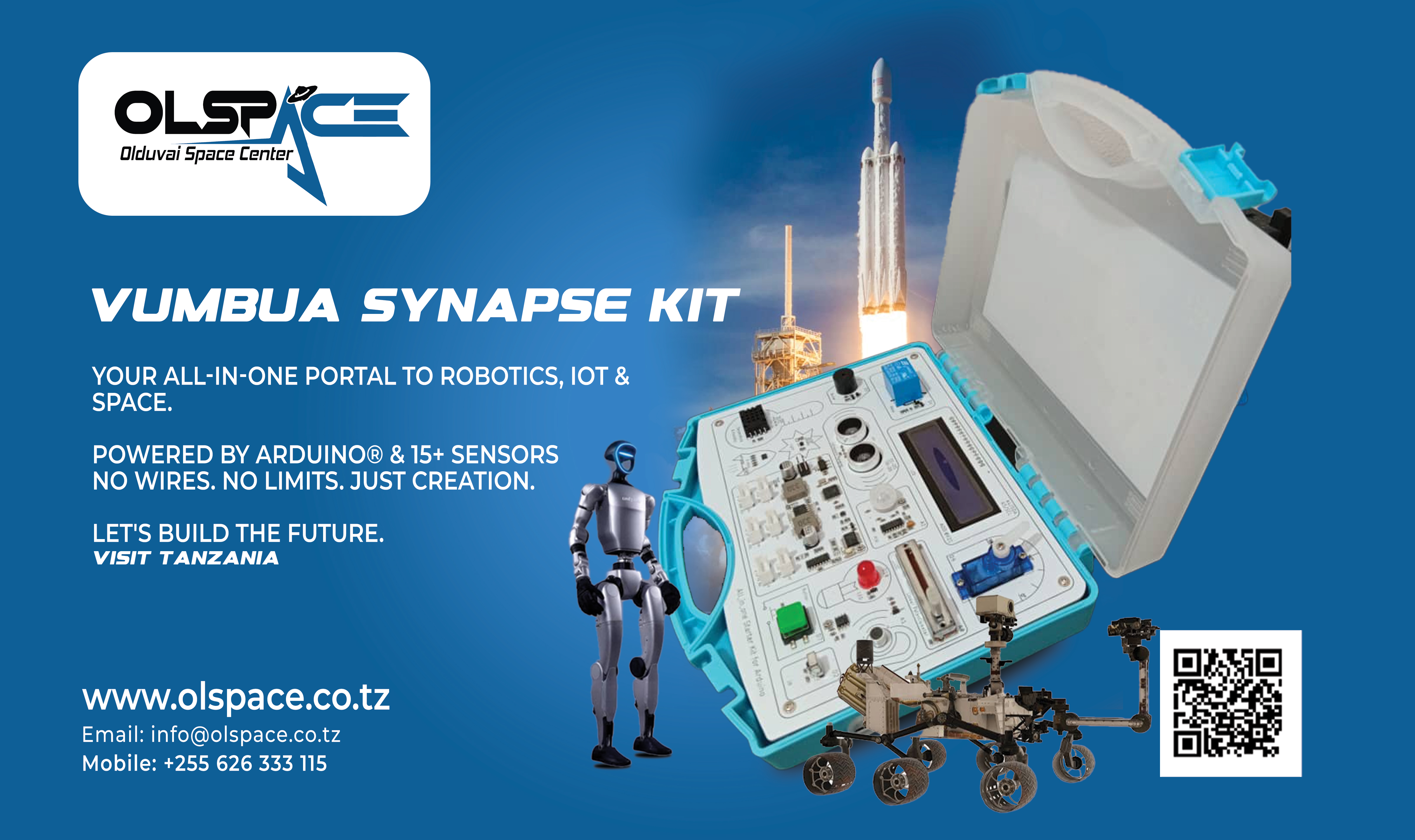
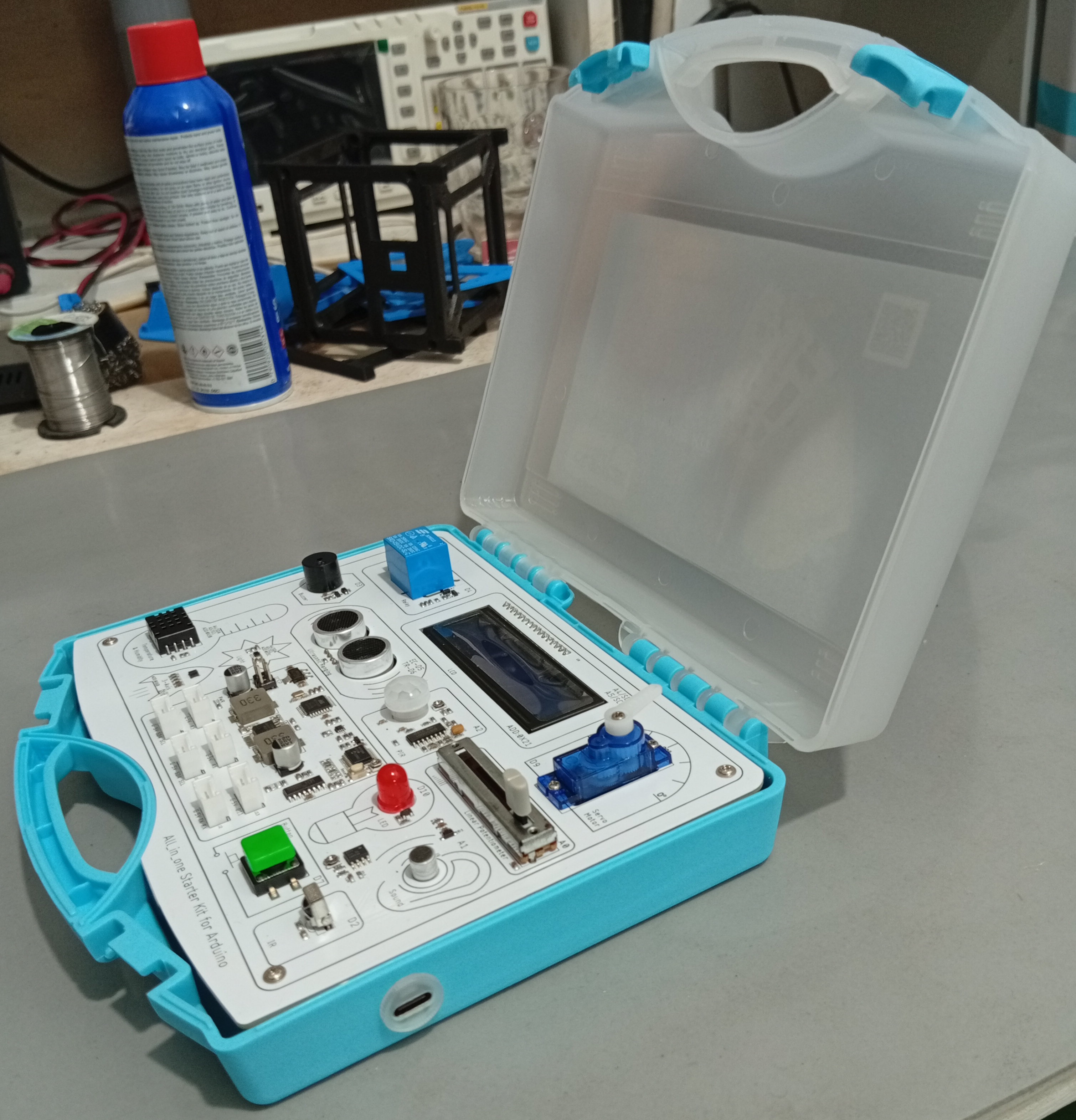
One box, one Arduino brain, 15+ sensors already wired in. No breadboard hunting, no missing jumper cables — a student opens the case and is coding within a minute, working through 12 lessons that go from a blinking LED to a working robot.
Built for three different desks
The same kit, three different starting points.
Students & learners
A direct path from "hello world" to something that moves, senses, or lights up on its own — no separate parts to lose between lessons.
Teachers & schools
One box per student instead of a drawer of loose components. Less class time spent hunting for the right resistor, more spent building.
Hobbyists & engineers
A fast way to test an idea before committing to a custom board — most of the common sensors are already on hand.
Not just a kit — a way into aerospace
OLSPACE is an aerospace company first. The Vumbua Kit exists because the missions need engineers, and this is where that starts.
Real measurement, not just theory
Light, temperature, humidity, and sound sensors teach the actual discipline of science: take a reading, question it, take it again.
Circuits and code that do something
Every lesson ends with working hardware — a program controlling a real sensor or motor, not a diagram of one.
The same sensors, smaller scale
The kit's temperature, humidity, and accelerometer lessons use the same sensor categories OLSPACE's own CubeSat carries — a student who's used a Vumbua kit already recognizes half of what's on MapinduziSat-1's dashboard.
Actuators, distance, and motion
Servo control and ultrasonic ranging are the same fundamentals behind deployment mechanisms and guidance — the advanced lessons are early engineering, not a toy version of it.
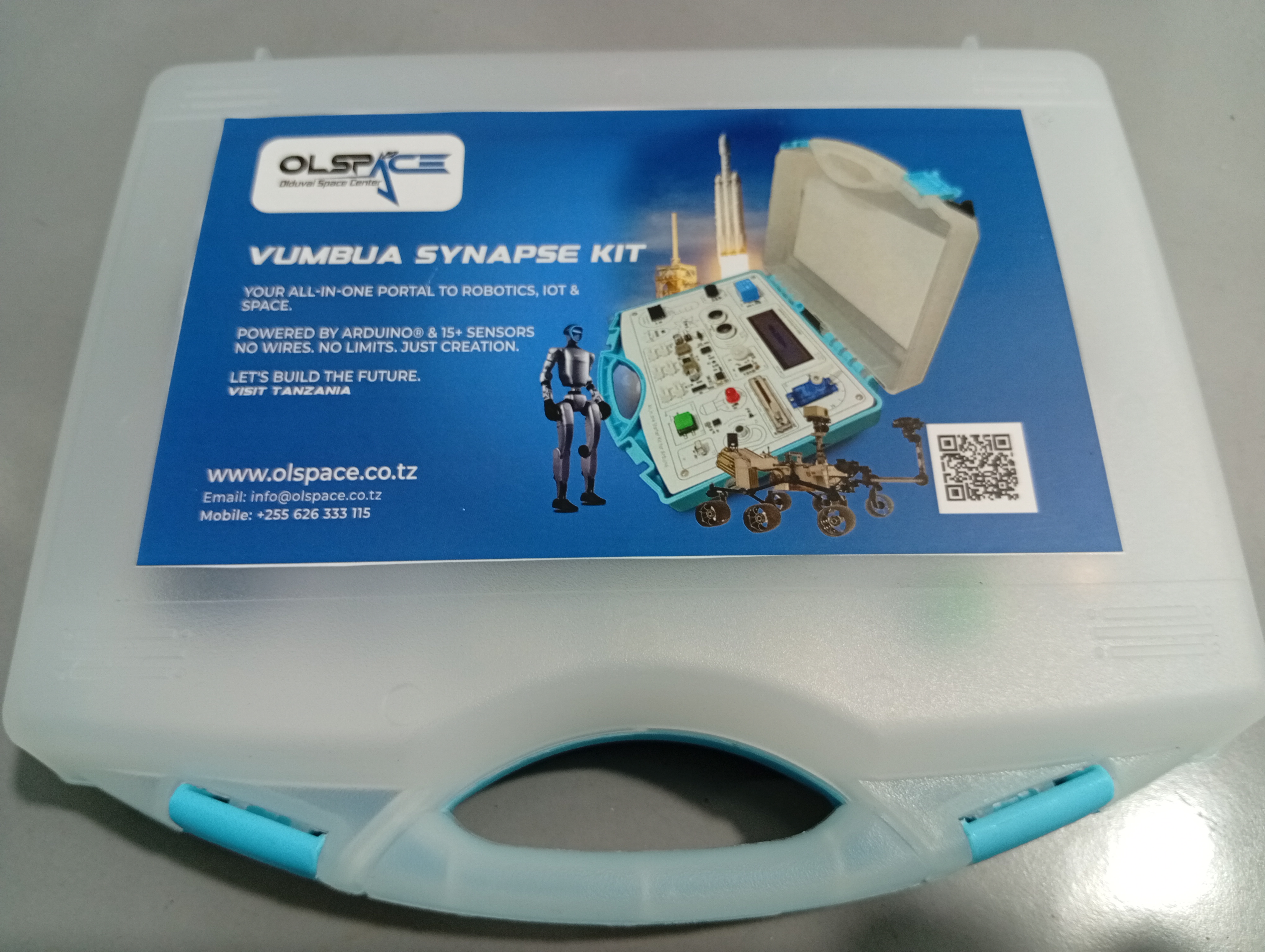
The kit, up close
Click any photo to see it full size.
A path, not a pile of parts
Three levels, four lessons each — every lesson builds on the one before it.
Beginner
Core concepts and basics — digital output, digital input, and your first sounds.
Intermediate
Sensors and displays — light, temperature and humidity, sound, and a 16x2 LCD.
Advanced
Motors and complex sensors — servos, ultrasonic ranging, infrared, and motion.
The 12 lessons
Filter by level, or scroll the full list.